72% ROAS Improvement for a Pet Supplies Brand on Amazon

72% ROAS Improvement for a Pet Supplies Brand on Amazon

July 24, 2026

Executive Summary

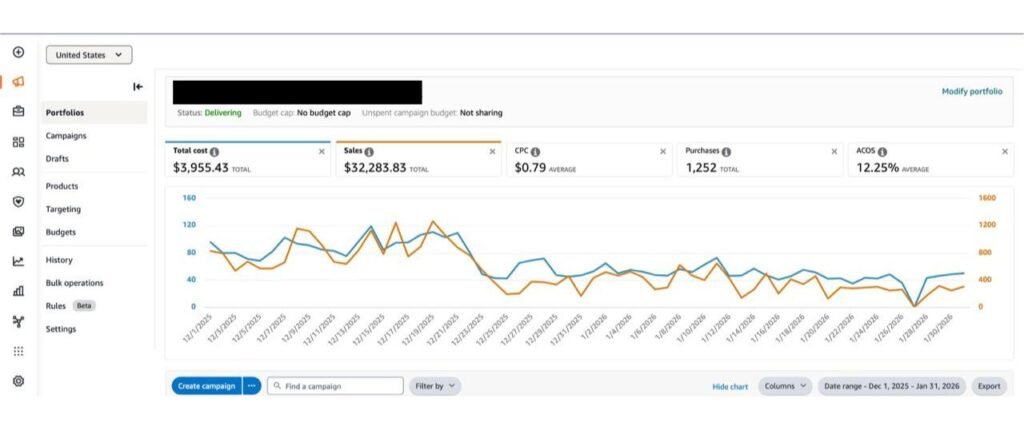
Digisorus partnered with a brand in the competitive Pet Supplies category to restructure and scale its Amazon PPC campaigns. Over a 60-day period (December 1, 2025 – January 31, 2026), we transformed inefficient ad spend into a highly profitable and scalable advertising system.

Note: All figures reflect ad-attributed revenue only, not total sales. Total revenue can be estimated using TACOS (11.5%), but this is not confirmed.

Note: All figures reflect ad-attributed revenue only, not total sales. This is a high-price-point product. Total revenue can be estimated using TACOS.

Over a 60-day period (December 1, 2025 – January 31, 2026), we restructured underperforming campaigns, cut inefficiencies, and implemented a scalable, profitable strategy.

Key Ad Revenue Outcomes

  • Ad-attributed revenue: $32,283.83
  • Revenue growth vs. prior period: +138%
  • ACOS reduction: 68% (from 30% to 12.25%)
  • ROAS improvement: +214% (from 3.60 to 8.16)
  • Total purchases (via ads): 1,252
  • Average CPC: $0.79

This demonstrates sustained revenue growth with strong margin protection in a highly competitive consumer niche.

The Challenge (Before Digisorus)

The brand had traction but lacked structured advertising control. Campaign performance was inconsistent, margins were compressed, and growth had plateaued.

Ad-Attributed Performance Before Engagement

  1. Ad revenue: $13,500
  2. Ad spend: $5,200
  3. ACOS: 30%
  4. ROAS: 3.60
  5. Total purchases (via ads): 620
  6. Average CPC: $1.25
  7. Traffic trend: volatile daily sales with no predictable scaling framework

Core Issues Identified

  1. Broad campaigns without intent segmentation
  2. Excess spend on non-converting search terms
  3. No structured negative keyword framework
  4. Inefficient bid strategy on high-volume keywords
  5. No scaling model for peak traffic days

Despite strong product-market fit, inefficient advertising limited ad-attributed revenue growth and profitability.

Digisorus Strategy

We implemented a structured, performance-first approach, emphasizing efficiency before scaling:

  1. Campaign Restructuring
    Strategy: We performed a deep-dive analysis of search term impression share combined with key performance indicators (KPIs) to identify core gaps within our targeting. Based on this, we rebuilt campaign architecture by match type and search intent, isolated high-converting keywords into Exact match campaigns, and separated branded, competitor, and generic traffic.
  1. Aggressive Search Term Optimization
    Strategy: Through weekly search term audits, we systematically removed low-performing queries and expanded our negative keyword lists. This immediate action eliminated wasted spend and improved conversion efficiency across top campaigns.
  1. CPC & Bid Optimization
    Strategy: We reduced bids on inflated placements, optimized top-of-search multipliers, and aligned keyword relevance to lower CPC. This disciplined approach reduced our average CPC while maintaining strong ad visibility.
  1. Controlled Scaling Framework
    Strategy: We increased budgets only after efficiency benchmarks were met, protecting profitability thresholds during scaling. Peak conversion days were leveraged strategically to accelerate ad-attributed revenue.

This approach ensured profitability first, then strategic scaling, reflecting Digisorus’ data-driven and client-focused methodology.

Results (After Digisoris Implementation)

Performance Period: December 1, 2025 – January 31, 2026
Optimizations were implemented throughout December, with full results reflected across the two-month period.


Metric

Before

After

Change

Ad-attributed revenue

$13,500

$32,283.83

1.38

Ad spend

$5,200

$3,955.43

-24%

ACOS

30%

12.25%

-68%

ROAS

3.6

8.16

2.14

Total purchases (via ads)

620

1,252

1.02

Average CPC

$1.25

$0.79

-37%


This demonstrates that the PPC investment was not only efficient in its own right but also a healthy driver of the brand’s overall revenue, with ad spend representing a highly controlled percentage of total sales.

Key Takeaways

  • Efficiency-first optimization:
    Improved ACOS and ROAS before scaling spend
  • Structured campaigns drive profitability:
    Segmentation, SKAG-style Exact match, and negative keyword management maximized ad efficiency
  • Scalable growth achieved:
    Ad-attributed revenue increased dramatically without sacrificing margin
  • Capital-efficient advertising:
    Lower CPC and higher conversion rates improved reinvestment capability

Conclusion

  • This case study highlights Digisorus’ expertise in converting underperforming Amazon PPC accounts into predictable, high-efficiency revenue engines:

    1. Triple-digit ad-attributed revenue growth
    2. ACOS reduced to highly profitable levels
    3. Major ROAS improvement
    4. Increased purchase volume at lower CPC

    At Digisorus, we do not rely solely on higher ad spend to drive results. Instead, we implement structured, data-driven PPC frameworks that maximize profitability first and scale strategically. Efficiency is the foundation of sustainable Amazon growth, and we make it a competitive advantage for every client.

Share :